Convenient
Extremely durable systems with a competitive price positioning thanks to a short supply chain that optimizes costs without compromising quality.


Raised flooring made of porcelain stoneware is the ideal solution for commercial spaces of any kind—from traditional retail shops to more demanding environments like bars and restaurants—that must meet specific technical requirements.
It combines elegance, durability, and functionality into a single system designed to address the needs of modern, public-facing workspaces.
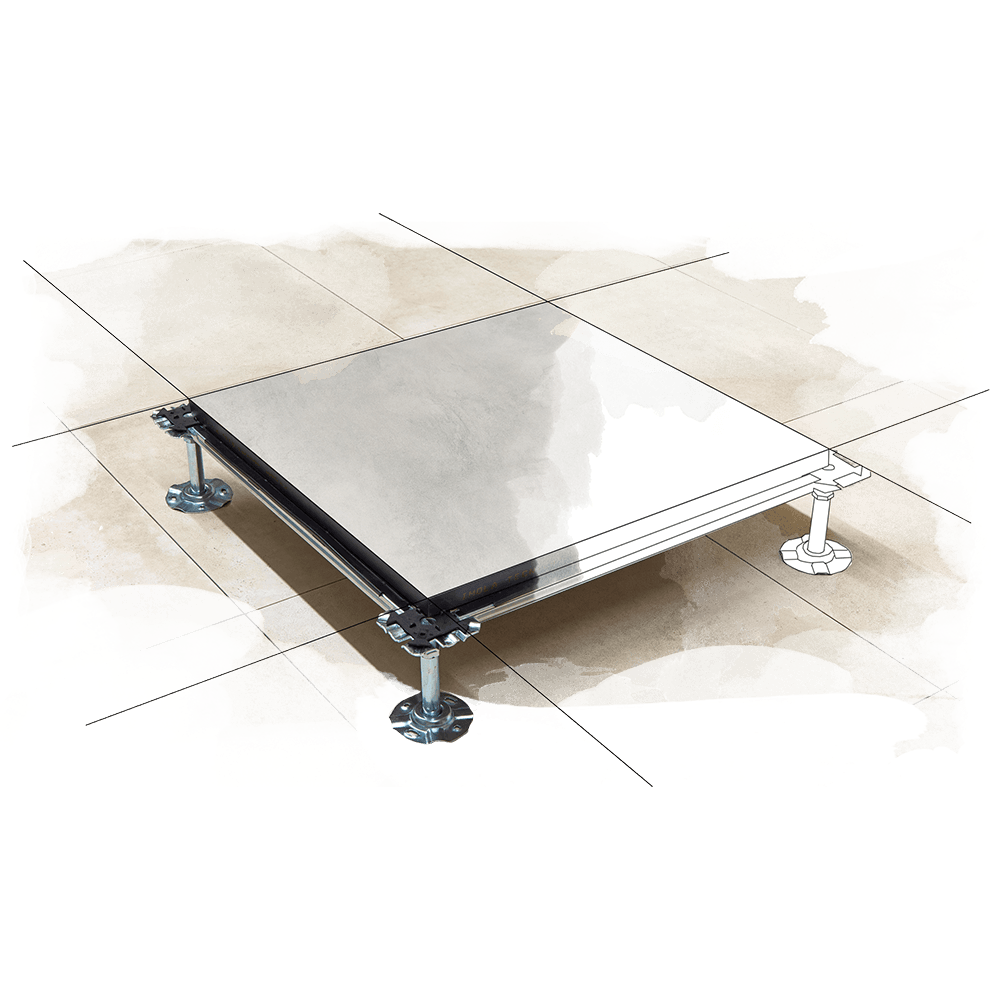
IT 2.6 SYSTEM
The technological excellence of Imola Tecnica concentrated in a reduced thickness.
Extremely durable systems with a competitive price positioning thanks to a short supply chain that optimizes costs without compromising quality.
Forward-looking with native CAM (Minimum Environmental Criteria) compliance. Certified materials for eco-sustainable projects.
From initial technical consultation to specialized installation. A single point of contact to guarantee reliable delivery times and excellent results.
The porcelain stoneware used for interior raised floors delivers exceptional technical performance. Through specialized production and high-temperature firing processes, the material becomes highly resistant to wear, impact, and chemical agents—essential qualities for commercial settings, which often experience heavy foot traffic yet must maintain an impeccable appearance at all times.
Maintaining these floors is quick and simple, ensuring minimal disruption to daily business operations. Furthermore, cleaning a porcelain stoneware raised floor is exceptionally easy, helping to provide a clean, hygienic environment for both customers and staff; the material is non-porous and resistant to stains, mold, and odors.
Opting for a raised floor system offers more than just high-level technical performance, facilitated by the accessible void created beneath the walking surface, it also allows for a versatile space tailored to your specific aesthetic preferences. With a wide array of colors, finishes, and formats available, porcelain stoneware raised flooring can be perfectly adapted to the design of any commercial space, creating an environment that reflects your brand identity and captures the attention of your customers.
In lobbies, shopping centers, and public areas, avoiding operational downtime is essential to protecting business revenue. We engineer our technical porcelain stoneware flooring for commercial spaces to provide a structured, turnkey solution capable of adapting to the frequent reconfiguration of retail environments.
The core, made of high-density (2,200 kg/m³) sintered porcelain stoneware, withstands constant pedestrian traffic and the use of industrial floor scrubber-dryers without any deformation or deflection.
The cavity created by micrometric supports protects structured cabling and plumbing pipes from interference. This engineered approach facilitates the subdivision of commercial spaces and allows for immediate access to utility systems for inspection, without the need for invasive construction work.
Dry-installation methods for large-scale surfaces speed up the construction process, helping to ensure that project deadlines are met. Furthermore, the walkable porcelain stoneware surface ensures a long lifecycle, free from aesthetic delamination or premature wear.
Scorzè, Venezia, Italia
Bologna, Italia
Yes, breaking down the aesthetic boundaries of the building envelope is one of the most significant benefits of porcelain stoneware.Outdoor ceramic raised floorsare resistant to rot and freeze-thaw cycles, preserving their primary structure intact. This feature allows architects and designers to extend thefinishes of indoor raised floorsto outdoor spaces such as terraces or rooftops, maintaining a rigorous material and functional alignment.
In commercial settings, such as bars or restaurants, unexpected issues can arise. Our IT 2.6 porcelain-on-porcelain system offers a solution that is completely inert to liquids. In the event of accidental leaks, the use of porcelain stoneware ensures total non-absorbency, preventing the need for costly replacements and lengthy operational downtime. This allows for a rapid restoration of the space, minimizing the impact on your day-to-day business operations.
A raised floor system creates a practical cavity beneath the walking surface—an ideal space for housing and protecting data networks, as well as electrical, plumbing, and HVAC systems in modern workspaces or public-facing facilities. The panels used for raised flooring in commercial areas can be easily removed with the help of professional suction tools; this allows you to inspect the underlying systems at any time and reconfigure the layout of your premises or shopping center without the need for disruptive and costly construction work.
Raised flooring made of porcelain stoneware is an excellent choice for commercial environments subject to intensive use and high foot traffic. Its resistance to wear and chemical agents ensures that it always maintains an impeccable appearance. Consequently, routine maintenance is extremely quick; from a technical standpoint, a regular annual inspection of the underfloor cavity is all that is required. Furthermore, the lack of any need for major, non-routine interventions—combined with ease of cleaning—minimizes long-term operating costs, while preserving a space that enhances the company’s corporate identity.
These are “standard” applications in most cases, as they almost always include furniture and partition walls. When faced with particularly demanding requirements to ensure a high load-bearing capacity of the raised floor, it is possible to reinforce both the panels and the structure, while maintaining the absolute stability of the floating raised floor.