Skip to content

Advantages of ventilated facades

Building envelope innovation for uncompromising thermal, aesthetic, and safety performance.

Request a technical consultation

For an intelligent urban space

Studies show that the protection offered by ventilated facade systems allows for energy savings of up to 20% , as well as significantly simpler and more cost-effective maintenance and superior durability compared to any other option. And thanks to its modular flexibility, it’s the ideal solution for enhancing the aesthetics of any space, transforming it into a beautiful as well as functional solution.

Thermal insulation

Constant and uniform

Sound insulation

For greater comfort

Protection

To protect the wall structures

Breathability

For maximum interior comfort


Fire safety and non-combustible materials

RTV Regulation 13

The RTV 13 regulatory compliance imposes rigorous standards for the fire reaction of facades. Imola Tecnica responds by using porcelain stoneware .
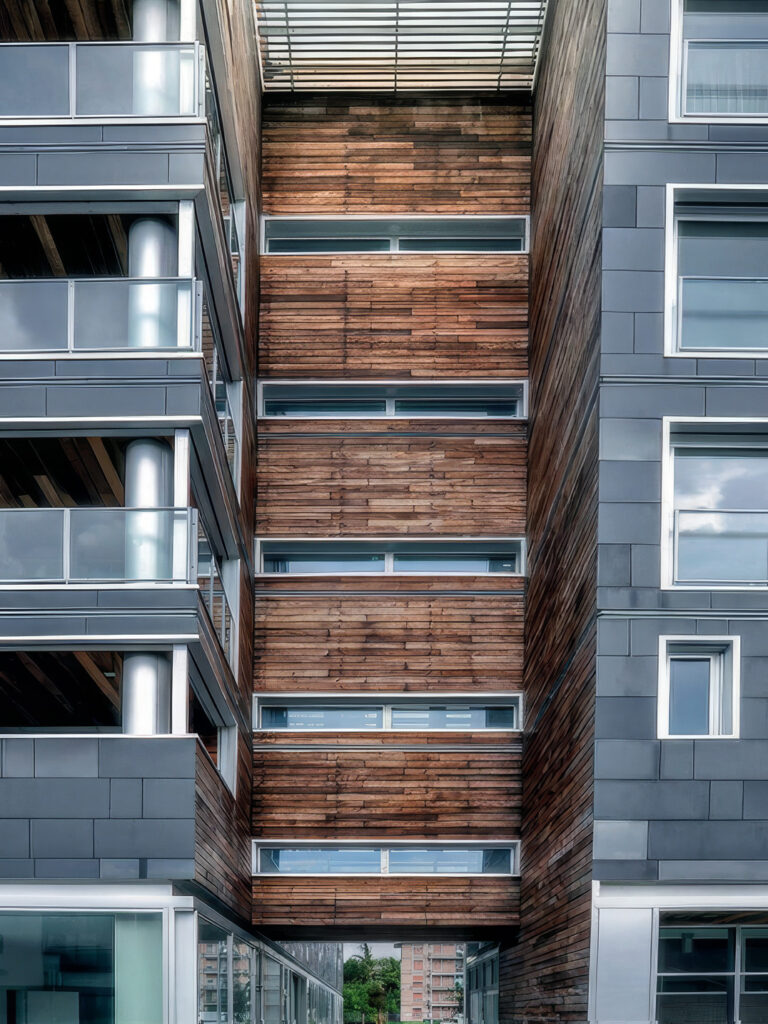
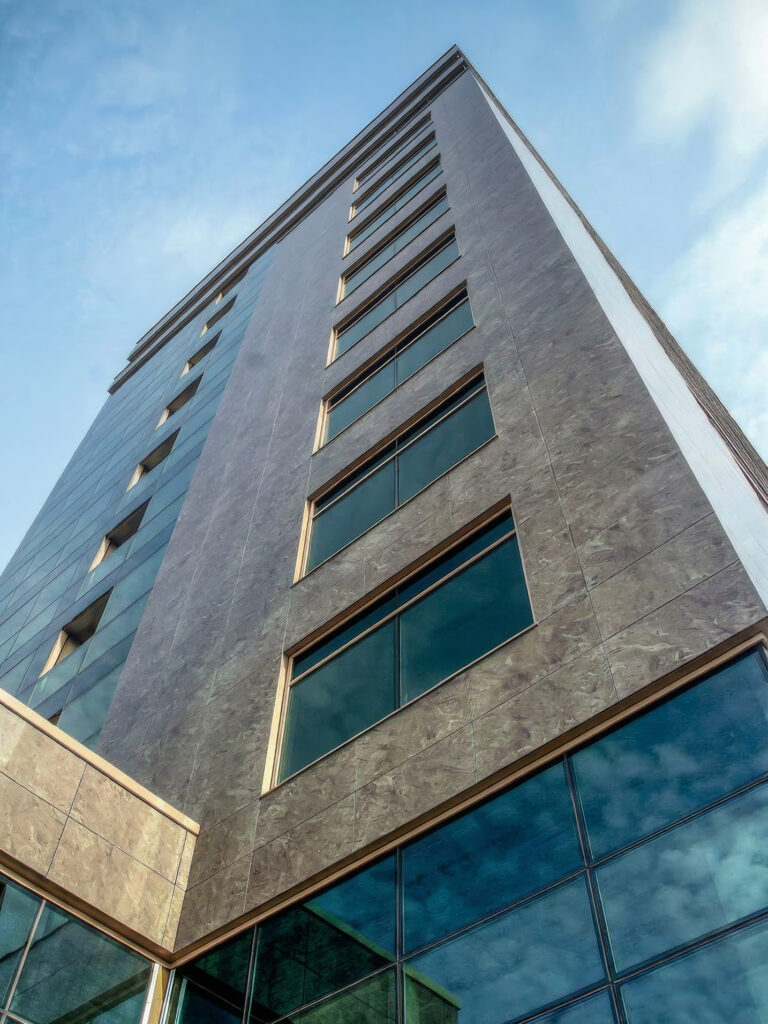
  • Native Class A1: stoneware is naturally non-combustible, guaranteeing maximum passive safety.
  • Smoke resistance: no release of toxic gases when exposed to direct flames.
  • Anchoring systems: engineered to withstand extreme thermal stress.
Fire safety and non-combustible materials
Durability and reduced maintenance

Durability and reduced maintenance

An investment that pays off over time.

Unlike plaster (subject to cracking and dirt) or wood (which requires periodic treatments), Imola Tecnica ceramic slabs maintain their aesthetic and mechanical properties unchanged for decades.

  • 50+ years average lifespan
  • <0.5% water absorption coefficient

Download the maintenance manual

Technical FAQs

Can all ceramic products be used as cladding for ventilated facades?

Yes, engineered ceramic material (whether colored, glazed, or full-body) is the ideal solution for creating external ventilated facades in porcelain stoneware . Its suitability for use as an external cladding is determined by its intrinsic characteristics of extremely high mechanical flexural strength and total frost resistance, thanks to its virtually zero water absorption.


What are the advantages of ventilated facades in porcelain stoneware?

From a building engineering perspective, this solution offers:

  • Protection to safeguard the wall structures: the insulating cavity and the class A1 ceramic material guarantee maximum safety of the facade system , eliminating humidity and protecting the building from the elements;
  • Efficiency and comfort: the system promotes significant acoustic insulation of ventilated facades and optimizes the building’s thermodynamics, generating energy savings of up to 20%;
  • Optimized management: the absolute inalterability of stoneware ensures significantly simpler and more economical maintenance in the long term compared to plaster;
  • Aesthetics and design: the modular flexibility of ventilated facades makes this system ideal for enhancing architectural aesthetics, allowing installation even on pre-existing buildings without the need for demolition.

Does the ventilated facade constitute an increase in cubic capacity?

No. When designing ventilated facades , and in compliance with current legislation on energy efficiency, it is calculated that the technical volumes generated by the external envelope do not contribute to increasing the calculation of the useful volume of the building.


Can porcelain stoneware be installed together with other finishes in a ventilated facade system?

The modularity of the system allows for the installation of different materials and finishes for ventilated facades on the same building , ensuring maximum executive flexibility for the Client’s project and a distinctive aesthetic result.


Why is installing a ventilated facade system preferable to traditional thermal insulation?

The main advantages of ventilated facades over traditional thermal insulation systems lie in the system’s superior thermodynamic and mechanical performance. The efficiency of the envelope is enhanced by three key engineering factors:

  • Greater breathability: guaranteed by the use of highly breathable insulating materials and by the creation of facades without paints and primers , elements which instead tend to seal the walls in external insulation systems;
  • Thermodynamic screening: the creation of an air gap interrupts direct solar radiation, reducing accumulated heat and promoting its removal through the chimney effect generated by ventilated facades . This mechanism also removes rainwater from the insulation layer and maximizes air exchange during the humid season;
  • Structural and material resistance: the durability of stoneware facades allows for exterior surfaces with unparalleled resistance and durability over time, eliminating the risk of cracking or deterioration typical of plaster.

Do you have SOA certifications for installing ventilated facades in public procurement?

Yes. Imola Tecnica holds the specific certifications (including the OS18-B category) required for validation in public tenders. This qualification allows us to formally operate as a specialized building envelope partner , assuming full responsibility for the project and directly managing the projects for the construction of turnkey ventilated facades .


What are the real maintenance costs of a ventilated facade over time?

The system requires no specific scheduled maintenance. Maintenance of porcelain stoneware ventilated facades requires only simple visual checks every few years to ensure the mechanical integrity of the components. From a material perspective, the ventilated facades offered by Imola Tecnica benefit from the high durability of porcelain stoneware : the complete absence of cracks and resistance to UV degradation drastically reduce maintenance costs compared to traditional plasters.


Is it possible to install ventilated facades on existing buildings?

Absolutely. Installing a ventilated façade for the energy retrofit of existing buildings is technically suitable for façade renovations . Being a dry-assembled system, it allows for covering damaged plaster without the need for demolition. The resulting cavity also provides the necessary space to conceal existing pipes or structural elements.


Get in touch with functional beauty

Together, we’ll design the ventilated facade system best suited to your technical and aesthetic needs.


    We invite you to read the Privacy Policy.